Greater Philadelphia & Southeastern PA
HVAC Maintenance
Seasonal tune-ups that keep systems efficient and under warranty.
5.0 on Google
176 five-star reviews
Licensed & Insured
PA #PA157168 · NJ Master HVACR #19HC00595900 · EPA 608 certified
32+ Years Experience
Master HVAC technician
24/7 Emergency Service
We answer day & night
Family Owned
A Trade Flex company
Almost every emergency call we run was preventable, and the evidence is consistent: the failures that strand people in January and July were visible as marginal conditions in October and April. A degrading ignitor, a capacitor reading below spec, a condensate trap beginning to restrict, a coil packed with debris — none of these stop a system in mild weather, and all of them fail under sustained load.
That is the entire argument for maintenance. It is not a subscription for peace of mind; it is the difference between a scheduled visit at a convenient hour and an after-hours call in weather you cannot avoid.
What a heating tune-up covers
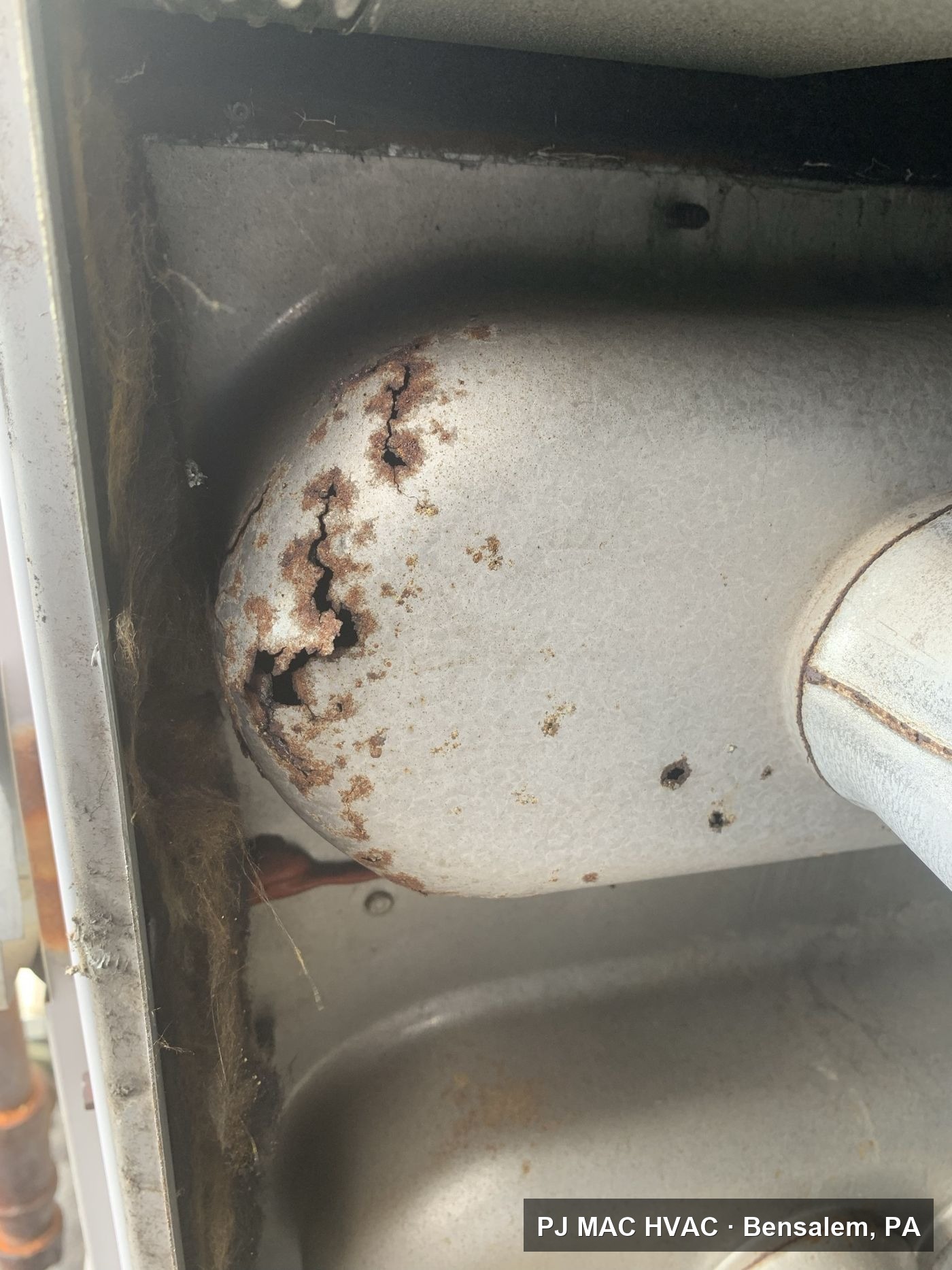
- ✓Heat exchanger inspection for cracks and deterioration — the safety item that matters most
- ✓Venting and draft verification, including exterior terminations
- ✓Burner cleaning and adjustment
- ✓Flame sensor cleaning — the single most common cause of a furnace that lights then quits
- ✓Ignitor condition assessment before it fails rather than after
- ✓Limit and pressure switch operation
- ✓Blower motor, wheel and capacitor condition, with capacitors measured rather than eyeballed
- ✓Condensate drain, trap and pump on high-efficiency equipment
- ✓Gas pressure and combustion verification with instruments
- ✓Filter condition and overall airflow assessment
- ✓Thermostat calibration and configuration
What a cooling tune-up covers
- ✓Condenser coil cleaning — consistently the highest-value item on an older outdoor unit
- ✓Evaporator coil inspection and cleaning where accessible
- ✓Refrigerant charge verification by superheat and subcooling, not by gauge pressure alone
- ✓Capacitor and contactor condition, both common heat-wave failures
- ✓Condensate drain and pan clearing, plus float switch verification on attic equipment
- ✓Blower and airflow assessment
- ✓Electrical connections, amp draw and disconnect condition
- ✓Clearance check around the outdoor unit
The two items that pay for the visit on their own
First, condenser coil cleaning. A coil packed with cottonwood, pollen, grass clippings and dryer lint cannot reject heat, so the compressor runs at higher pressure and higher current every hour it operates. That costs money continuously and shortens the life of the most expensive component in the system. On tight lots across Havertown, Drexel Hill and the Philadelphia rowhome stock, where clearances are already marginal, it matters more than average.
Second, the condensate float switch on attic air handlers. A great many homes across Radnor, Wayne, Malvern and the Chester County developments have equipment in the attic, and a clogged condensate drain there does not just stop the system — it puts water through a ceiling. There should be a secondary pan and float switch to prevent exactly that. Those switches fail, get bypassed during earlier service calls, or were never wired correctly. Confirming yours works is worth more than most of the rest of the visit.
Maintenance and your warranty
Most manufacturers require documented annual maintenance for equipment warranties to remain valid. If your system is still inside its warranty period, skipping maintenance can cost you coverage on precisely the components the warranty exists to protect — compressors and heat exchangers, the two most expensive things that can fail.
It is worth knowing where you stand before you need to make a claim rather than discovering the requirement at the point of failure.
When to schedule
Heating in early fall, cooling in spring. The point of shoulder-season scheduling is not convenience — it is that parts are available, appointments are easy to get, and any repair found is cheapest when it is not competing with an entire region calling at once.
In the Lehigh Valley, around Allentown and Bethlehem, the case for pre-season heating service is stronger still, because systems there run substantially more hours per season than in the Philadelphia suburbs and marginal components fail sooner.
Multi-system and zoned properties
Larger homes across Villanova, Malvern and Chester County frequently run two, three or more systems, and they are rarely all on the same service schedule. It is common for us to find one in good condition and another neglected for years simply because nothing has failed on it yet.
We document condition and remaining life on each system separately, so you get a real picture of the property rather than a single verdict on the HVAC. On zoned equipment we also verify damper operation, zone board function and whether each zone is achieving the airflow it should — zone faults develop slowly enough that households adapt around them instead of reporting them.
Commercial maintenance
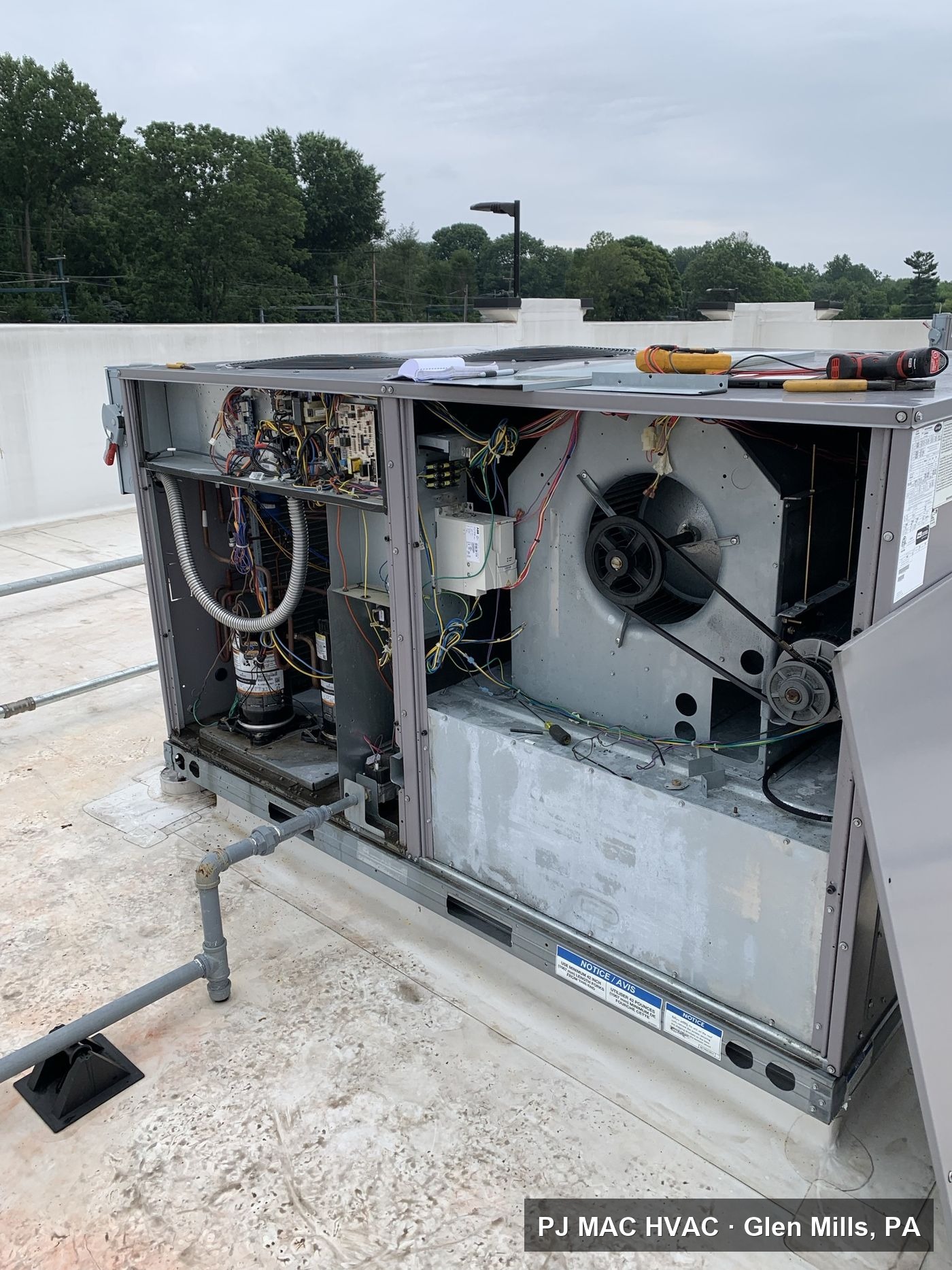
For a business, planned service is worth considerably more than it costs. A heating or cooling failure during trading hours is a staffing and revenue problem, and rooftop and packaged equipment is both harder to get to in an emergency and easier to keep ahead of on a schedule.
HVAC Maintenance by City
HVAC Maintenance — Questions We Get
How often should HVAC equipment be serviced?
Annually at minimum — ideally heating in early fall and cooling in spring. Systems in the Lehigh Valley run more hours per season than in the Philadelphia suburbs, so pre-season heating service matters more around Allentown and Bethlehem.
Does skipping maintenance affect my warranty?
Frequently, yes. Most manufacturers require documented annual maintenance for equipment warranties to stay valid, so skipping it can cost you coverage on compressors and heat exchangers — the two most expensive components a warranty exists to protect.
Is a tune-up just a filter change?
No. Heating covers heat exchanger inspection, venting and draft verification, burner and flame sensor cleaning, ignitor condition, limit and pressure switch operation, blower and capacitor condition, condensate components, and combustion verification with instruments. Cooling covers coil cleaning, charge verification by superheat and subcooling, capacitor and contactor condition, and condensate safety.
Which single item is most worth doing?
On an older outdoor unit, condenser coil cleaning. A packed coil forces the compressor to run at higher pressure and current every hour it operates, which costs money continuously and shortens the life of the most expensive part of the system.
I have an attic air handler. What should be checked?
The condensate drain and, critically, the secondary pan float switch. A clogged drain on attic equipment puts water through a ceiling. Those float switches fail, get bypassed during earlier service, or were never wired — verifying yours works is worth more than most of the visit.
My house has three systems. Do they all need servicing?
Yes, and they will not be in the same condition. Systems on one property age at different rates and are rarely on the same schedule, so it is common to find one in good shape and another neglected for years because nothing has failed on it yet.
When is the best time to book?
Shoulder season — early fall for heating, spring for cooling. Parts are available, appointments are easy, and any repair found is cheapest when the whole region is not calling at once.
Do you maintain commercial equipment?
Yes, including rooftop and packaged systems. For a business, planned service is worth well more than it costs, since a failure during trading hours is a revenue problem and rooftop equipment is harder to reach in an emergency.
Related services
HVAC Maintenance Near You
Our Work
HVAC Maintenance — recent jobs
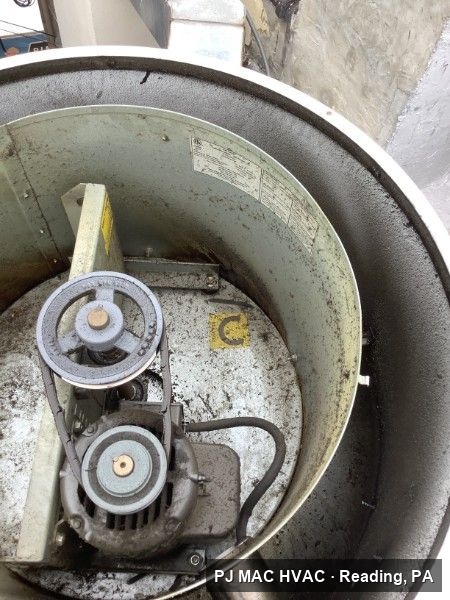
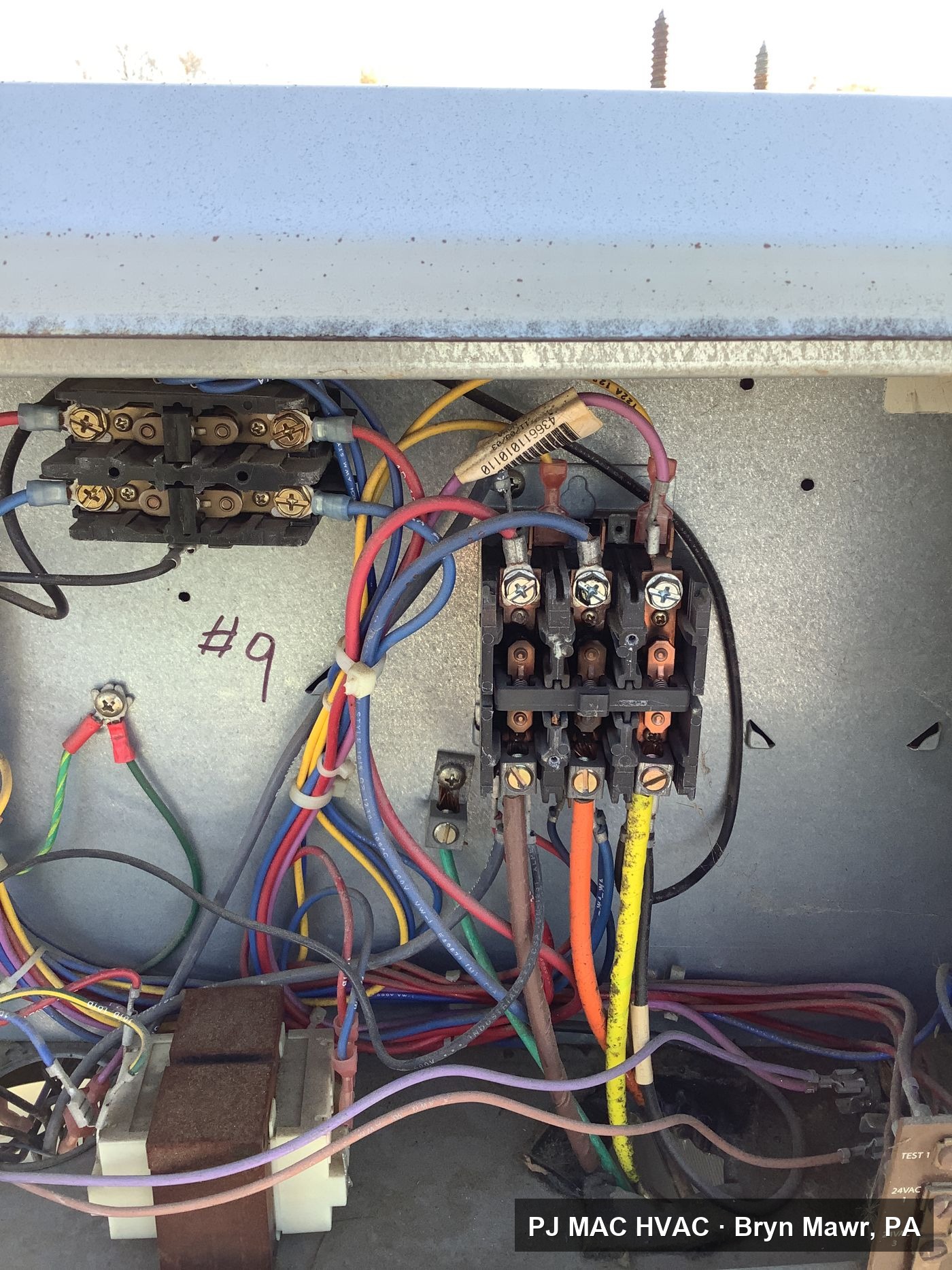
Real photos from our technicians, not stock imagery.